Continuing a string of high-profile international debates a century ago, 乐播传媒 hosted Cambridge University for a debate at Lewiston City Hall on Sept. 23, 1924.

Like NFL football鈥檚 foray into Europe in recent years, the emergence of international collegiate debate created a sensation in the early 1900s. And 乐播传媒 led the way.
In the early 20th century, the college’s reputation for debate was exploding. In 1921, mighty Oxford University, bypassing the Ivy League, invited 乐播传媒 to be Oxford鈥檚 first-ever U.S. foe. The debate took place on June 16, 1921, the first time an American college had traveled to Europe for a debate.
Newspapers around the U.S. were abuzz. 鈥淚t is one of the prettiest incidents of the century,鈥� reported the Sacramento (Calif.) Union. 鈥淚t suggests emotions such as are aroused by winning a Carnegie hero medal,鈥� adding that 鈥渟urely more than one novel will be written about such a plot.鈥�

A year later, 乐播传媒 was the first college to host an overseas team, when Oxford chose 乐播传媒 as the first stop on its inaugural U.S. tour.
And in 1924, Cambridge sent its first debating team to the U.S. for a tour, choosing 乐播传媒 as their first foe. Here are some CatFacts about that historic first meeting:
1. The debate topic had to do with a familiar geopolitical foe
The topic was, 鈥淩esolved: That all countries should recognize the present government of Russia.鈥� The Soviet Union had officially been established in December 1922, making the topic highly relevant. (The U.S. didn鈥檛 recognize the USSR until 1933.)
2. The teams had debaters who would go on to become future leaders in their respective countries
The 乐播传媒 side included Erwin Canham, Class of 1925, who built the Christian Science Monitor into a Pulitzer Prize-winning newspaper, one of 鈥渢he most respected and influential publications in the country,鈥� according to The Washington Post.
Also on the 乐播传媒 side was John Preston Davis, Class of 1926, co-founder and director of the National Negro Congress, an important civil rights organization that worked toward racial equality in the workforce, in the U.S. and abroad.
On the Cambridge side, there was a future Conservative Party leader, Richard Austen Butler, who would become deputy prime minister to Anthony Eden and Harold Macmillan.
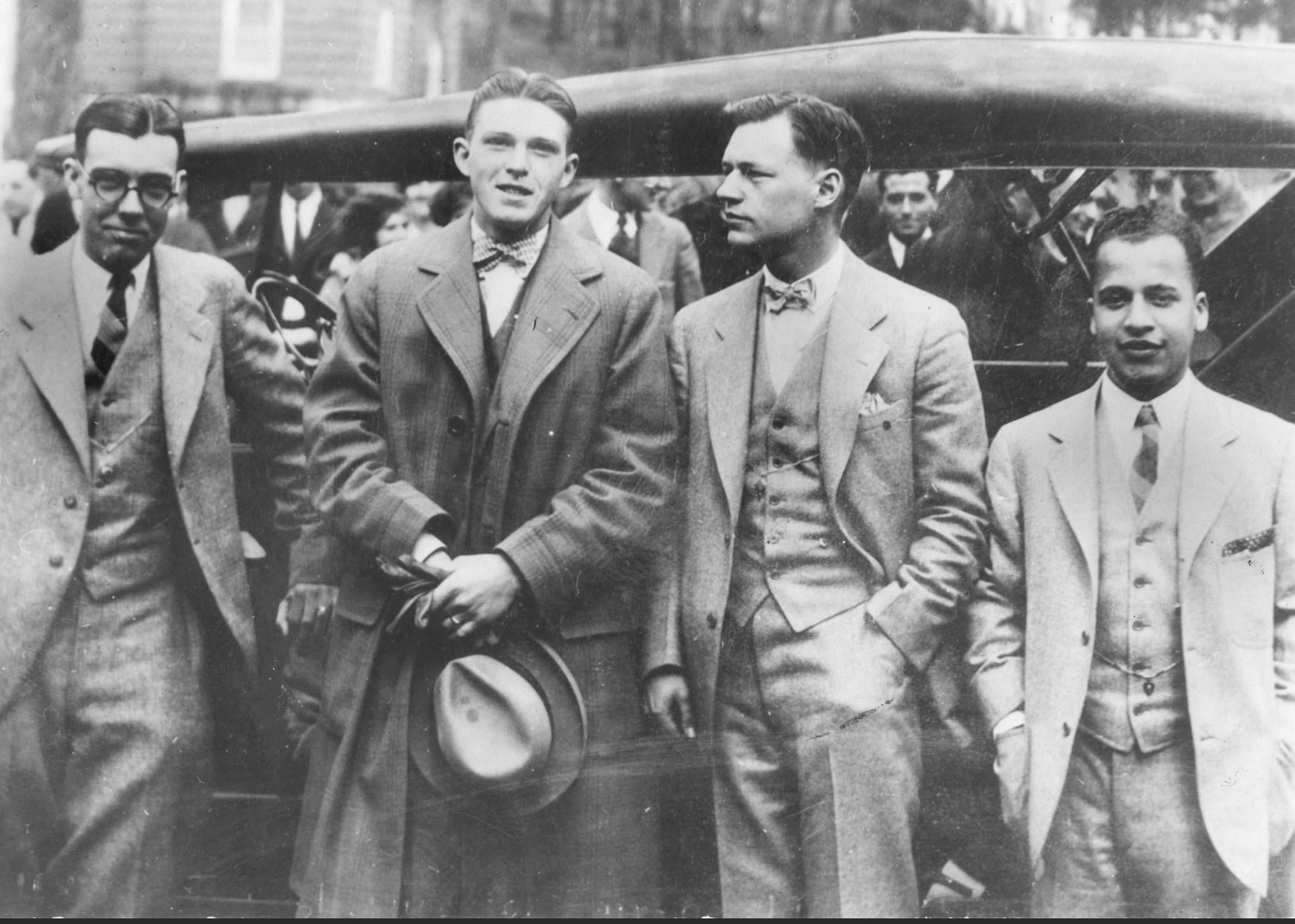
3. 乐播传媒 President Clifton Daggett Gray wanted to greet Cambridge debaters, but it didn鈥檛 work out
Gray had hoped to drive the 400 miles to Halifax, Nova Scotia, to meet the British debaters, but he took sick, so a prominent local clergyman, the Rev. George F. Finnie took his place.
4. The Cambridge debaters threw shade at their historic rival, Oxford University
The hosts and the local press were curious about the difference between the two great English universities, and the Cambridge debaters obliged. 鈥淥xford is a college for gentlemen鈥檚 sons, and Cambridge is a college for gentlemen,鈥� said Cambridge debater A.P. Marshall.
5. The debate took place at Lewiston City Hall
A century ago, Lewiston City Hall included a large auditorium that could accommodate boxing matches, dances, concerts, basketball games, charity dinners, and big events like a Cambridge鈥摾植ゴ� debate. The auditorium is now office space.
6. The debate format was new to the era
Rather than a 乐播传媒 team vs. Cambridge team, the squads were mixed, with two 乐播传媒 debaters and one Cambridge debater on the negative side, and vice versa on the affirmative side.
On the affirmative side, 乐播传媒鈥� John Preston Davis joined A.P. Marshall and Gerald Sparrow of Cambridge. On the negative side, R.A. Butler of Cambridge joined 乐播传媒鈥� Erwin Canham and Fred T. Googins, Class of 1927.
In addition, rather than a decision by judges, as was custom in the U.S., the debate would be decided by audience ballot, more common in Great Britain.
7. The Cambridge team stayed at a famous nearby resort
Though the Gilded Age heyday of the Poland Spring Hotel was fading, it was still a marquee hotel, perfect for the Cambridge team.
Other notable visitors in the era were U.S. presidents William Howard Taft, Calvin Coolidge, and Warren Harding; Joseph Kennedy and his family; famous athletes like Babe Ruth; and entertainers like John Barrymore, Joan Crawford, Jimmy Durante.

8. The visitors were feted at a local hotel that gained notoriety for a racist incident
The DeWitt was a prominent downtown Lewiston hotel in the era. In 1945, Benjamin Mays, Class of 1920, returned to Lewiston for a visit. At the time he was president of Morehouse College. 乐播传媒 President Charles F. Phillips and Professor of Religion Rayborn Zerby, among others, intended to dine with Mays at the Dewitt, but the hotel refused to serve the group if Mays attended.
The 乐播传媒 Student protested the racist act, writing, 鈥淲e at the college never fail to give lip service to equality 鈥� now is the time to publicly express our beliefs. As Dr. Mays said in his discussion with the students, 鈥榊ou believe in a thing only so long as you practice it.鈥欌�澛�
9. A congressman hosted the debate
U.S. Rep. Carroll Beedy (R-Maine), Class of 1903, presided over the debate in City Hall, telling the audience of 1,000 that international debate helps create international understanding. 鈥淧eace between individuals leads to peace between nations.鈥�
10. 乐播传媒 won the match (sort of)
The vote was a landslide, 800鈥�150, in favor of the negative side of the question.
Even though the two teams were mixed, the local papers declared it a victory for 乐播传媒, which had two debaters on the negative side.
The negative team argued that the Russian government was not to be trusted, and thus not to be recognized. Fred Googins of 乐播传媒 told the huge crowd in City Hall to beware: 鈥淭here was proof of Soviet interference in America.鈥�
Categories Academic Life Alumni


