Horse Chestnut
Aesculus hippocastanum 触听厂补辫颈苍诲补肠别补别
Submission: Lucas Jordan and Elysse McCambley
Identification:
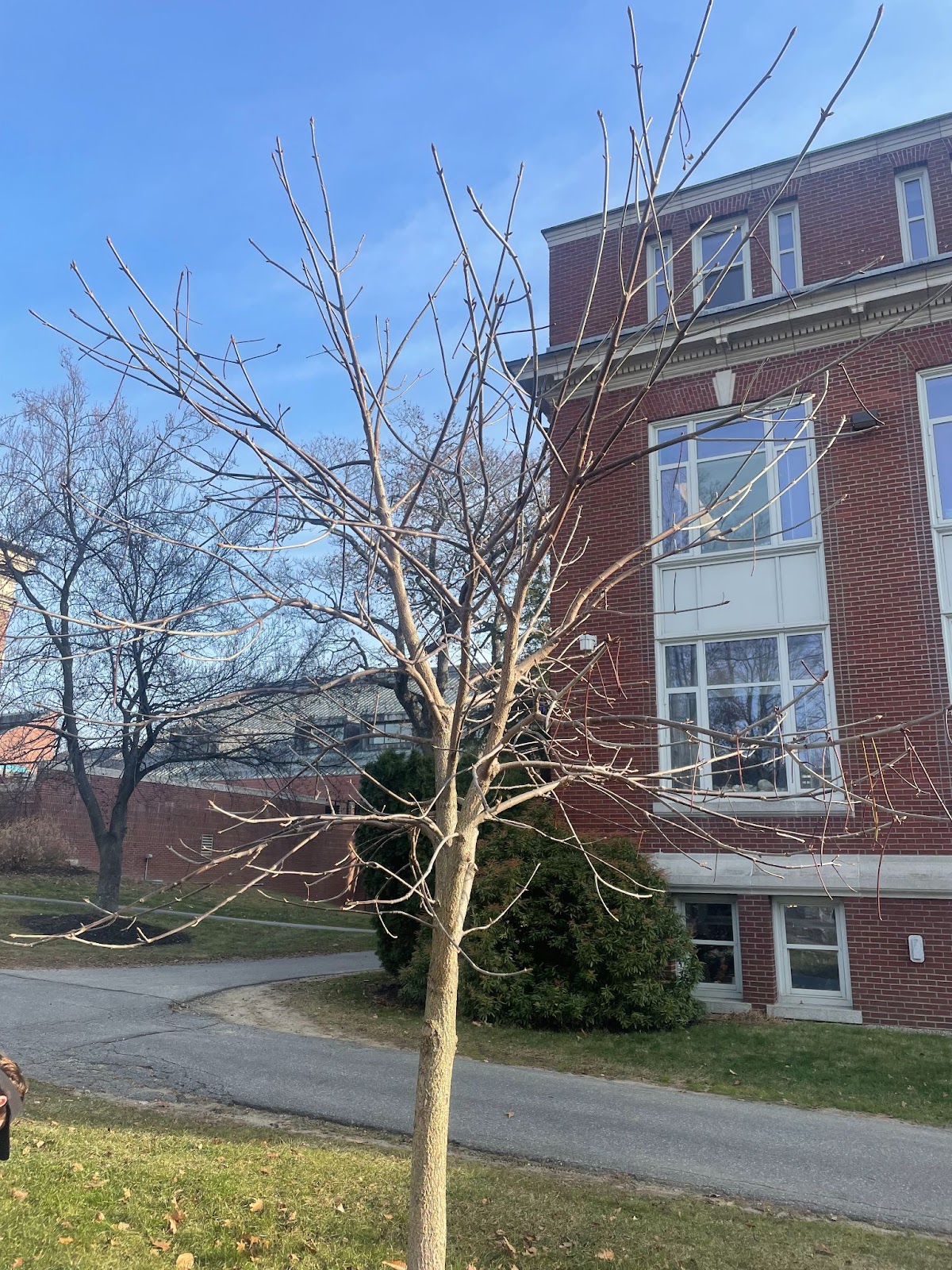
Leaves: Deciduous; oppositely arranged; palmately compound leaves; 5 obovate leaflets with lobed, serrate margins.
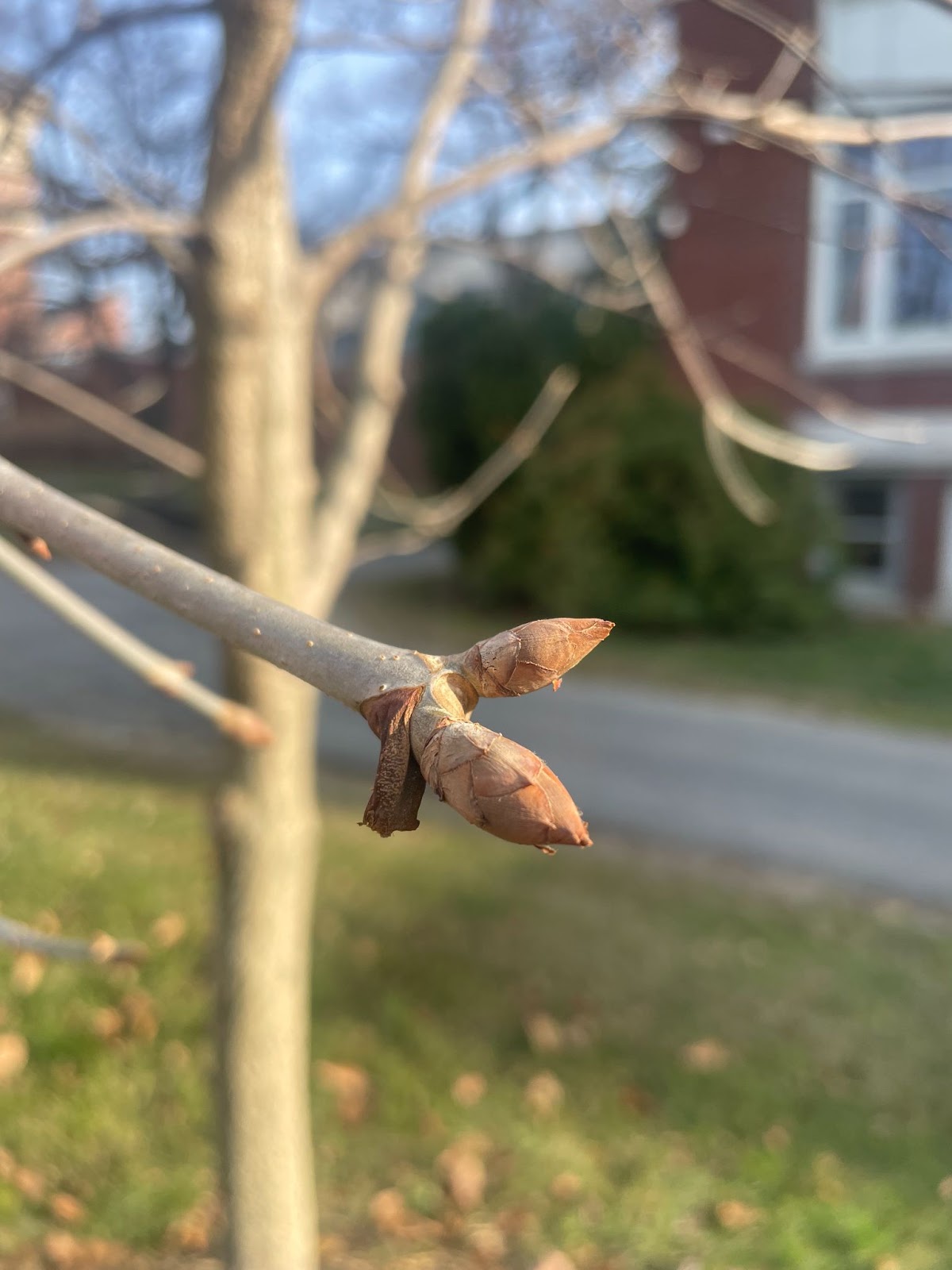
Twigs and buds: Glabrous; stout; reddish-brown; have prominent horse-shoe-shaped leaf scars; series of bundle-scars around margin of leaf scar
Fruit: Green husk covered in spikes; nut and husk are round; nut is red-brown, bitter, glabrous, with a conspicuous scar.
Bark: Pinky-gray and smooth as juvenile; darker gray with scaly plates when older.
Flower: Showy white flowers with pink base; borne in upright panicles
Natural History:
The horse-chestnut (Aesculus hippocastanum) of the family Sapindaceae is a medium-sized (up to 40m) deciduous tree native to southeastern Europe, introduced and cultivated all over the world. In North America, where it’s a very common ornamental, its range extends from Georgia up through the Appalachians all the way into northern Quebec along the eastern shore of the Hudson Bay. It can be found in the Midwest in Minnesota and Iowa, extending to the western seaboard of the Pacific Northwest. It鈥檚 a medium-sized tree that likes to grow in primarily bottomland sites, on moist, well-drained soils in either full or partial sun (4-6 hours a day). Its rapid growth rate as a young tree slows down as the tree ages. It is moderately tolerant to drought and different salts, making it a reliable ornamental. Additionally, the horse-chestnut is notable for its relatively high tolerance of atmospheric pollution, allowing it to persist as a shade-casting ornamental in the interiors of cities.
The chestnuts of A. hippocastanum, otherwise known as conkers, are the defining feature of this tree. The Turks and ancient Greeks are known to have used the chestnuts to treat horses for overexertion, gastrointestinal discomfort, and coughs. Extracts from various parts of the tree have also been used to help treat patients for fevers, gastrointestinal disorders, and joint pain. Extract from the chestnuts is still used to alleviate swelling and facilitate blood flow in patients. Their equinal medicinal use, in conjunction with the leaf scars which resemble a horseshoe, is regarded as the Horse-chestnut鈥檚 namesakes. The British schoolyard game of 鈥渃onkers鈥� is the most famous use of this tree, in which two players, each with conkers suspended from string, strike their opponent鈥檚 conker in an attempt to break it.
The horse-chestnut has shown to be very sensitive to a variety of pests and diseases. Pertinent pests include the white-marked tussock moth caterpillar and the Japanese beetle, which chews down the leaf veins disrupting vital cycles making it difficult for the tree to persist over a long period of time. It is also prone to leaf blotch, a disease which causes leaves to turn brown, dry out, and eventually fall off.
While the tree is an abundant ornamental and has spread across the globe, its native populations seem to be declining. Invasive organisms such as the leaf-miner moth, which affects individuals’ reproductive abilities, have greatly restricted horse-chestnut populations. Along with invasives, human impacts such as deforestation, increased urbanization, and population fragmentation have taken a toll on native populations.
References:
Gilman, Edward F., and Dennis G. Watson. 鈥�Aesculus hippocastanum 贬辞谤蝉别肠丑别蝉迟苍耻迟鈥�.&苍产蝉辫;
Institute of Food and Agricultural Sciences, University of Florida. 1993; 1-4.
Huggett, Brett. 鈥淒endrology Handbook鈥�. 乐播传媒 College Biology Department. 1-169
Thomas, PA, Alhamd, O, Iszku艂o, G, Dering, M, Mukassabi, TA. 鈥淏iological Flora of the British
Isles: Aesculus hippocastanum鈥�. J Ecol. 2019; 107: 992鈥�1030.
Struthers, Jane. 鈥淭he Game of Conkers鈥�. Historic UK. n.d.